
The Diamond Standard Explained
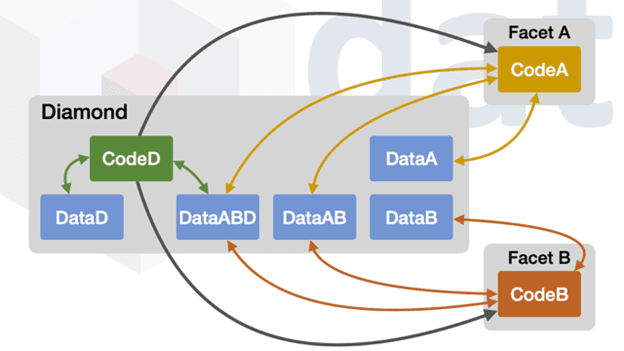
EIP-2535, commonly known as the Diamond Standard, defines a proxy architecture in which a single diamond contract delegates function calls to multiple implementation contracts called facets. Unlike simpler proxy patterns such as UUPS or Transparent Proxy, a diamond can expose an unlimited number of functions and can point different function selectors to different facets. This makes it possible to build large, complex systems within a single contract address while keeping each logical domain in its own deployable unit.
The key mechanism is the diamondCut function, which accepts an array of facet addresses and their corresponding function selectors. When a user calls the diamond, the fallback function looks up the selector in a mapping and delegatecalls the appropriate facet. Because all facets share the diamond's storage context, they can read and write the same state — but this also means storage layout must be managed carefully. AppStorage and ERC-7201 namespaced storage are two common strategies to avoid slot collisions.
In practice, the Diamond Standard is ideal for enterprise tokenization platforms where requirements evolve continuously. A compliance facet can be swapped when regulations change. A transfer facet can be upgraded to support new settlement mechanisms. And because the diamond address never changes, all integrations, permissions, and token balances remain intact. FeverTokens' POF framework abstracts much of this complexity, providing CLI tools to generate, test, and deploy diamond-based systems with minimal boilerplate.